Inside the factory
20,000 m2, 115 people, and how capacity is counted.
OpenFrames in one shop, covers in another, powder in a third, and assembly happens once. Splitting the work is how a hide cover and a welded frame end up on the same delivery.
Tube is cut, welded, ground and pre-treated before anything else happens. Grinding is the stage that gets skipped when a schedule slips, and it is the stage that shows up later as a flaking coat at the joint.
Powder is a batch process, so a colour change costs half a day. That is why the powder card is agreed before production instead of during it.
Stock arrives kiln-dried at 8 to 10 percent moisture, then it is jointed and assembled with mortise and tenon, with a corner block at all four corners. Timber that arrives wet moves once it is in the steakhouse, and a chair that moves racks.
Edges are sanded by hand and faces by machine. Machines round an edge differently from a hand, and the edge is the part that sits under a forearm.
Hide is cut on a pattern rather than off the roll, so the stretch direction runs the way the seat flexes. Panels are stitched at 6 mm, pulled over the deck and stapled underneath.
The staple line decides how long a cover lasts. On the lip, every wipe works against it. Underneath, nothing touches it until the cover is replaced.
Everything comes together once. The first piece of a batch is photographed next to the master sample from the approved order, under the same light, and that photograph goes into the batch record.
It is a low-tech check, and it catches the one thing a specification cannot describe: a colour that has drifted.
Yes, by video walk-through at a time you pick, or in person in Lecong. The camera goes wherever you ask, including the powder line, which is usually the question behind the request.
Our own QC signs the batch record, and a third-party inspector is welcome at any point. Send the inspection scope before the goods are packed. After packing the inspector is looking at a closed carton.
20,000 m2, 115 people, and how capacity is counted.
OpenThe hides, foams and powder behind each stage.
OpenThe nine numbers these stages are held to.
OpenFloor plan and seat count are enough to start.
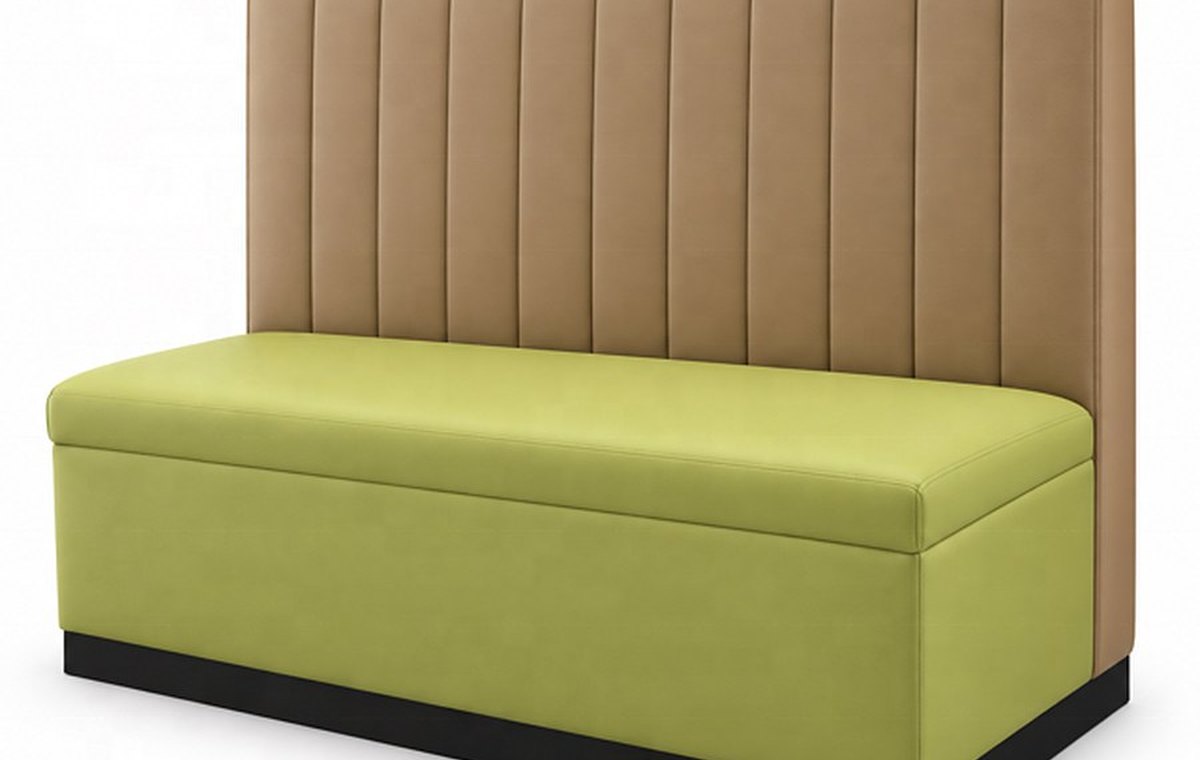
OpenFree-standing booth seating carries a counterweighted base so the run resists a guest leaning back without a wall fixing.
OpenInstallation method statement for furniture runs to one page: access, sequence, fixings, protection and who signs off.
OpenCorner blocks glued and screwed into the angle between seat rail and leg add about 30 percent to the racking stiffness of a frame.
OpenTable base spread sets how far a top can overhang before it tips.
OpenDimensions, seat count and the finish you have in mind are enough to start. What comes back is a quantity per line, a leather card, a sample date and a loading window. All of it fits on one page.
Own workshop · EXW Foshan or DDP
Send the plan and the seat count. Answer inside two working days.
Chat on WhatsApp